How I Lost 31 Pounds Without Feeling Hungry
3 Tips to Deal With Hunger on a Diet

By: Jeremy Fox CNC, CPT
Published: November 14, 2024

Eating less and moving more are the foundations of any weight loss plan. Yet conventional calorie-cutting diets fail time after time.
Why is it that following the experts’ advice doesn’t work?
One word — hunger.
It boils down to that primal feeling. Being hungry all the time has been the death of many a diet and the reason drugs like Ozempic are so effective.
What if you could tame your hunger naturally and lose weight with less effort? Well, you can.
I’m sharing how I lost 31 pounds with simple diet strategies that kept me feeling full. So you can apply the same process to get off the yo-yo diet rollercoaster and finally reach your goal weight.
Why Diets Fail
Many diets fail because the calorie restriction is too severe.
When you cut calories too much or for too long, your body goes into a “starvation” response, which triggers a cascade of adaptations.
One of these changes is an imbalance in the hormones that regulate appetite. As a result, your hunger increases, and you eat more food.
I used to think cravings were just a lack of self-control. After enduring an extremely restrictive diet, I realized hunger hormones have a powerful effect that I couldn’t overcome with willpower alone.
Appetite regulation is how your body keeps your weight in equilibrium — like how your home’s thermostat keeps the temperature at 72 degrees.
Therefore, the key to sustainable weight loss is creating a calorie deficit without triggering this appetite adaptation.
How to Deal With Hunger While Dieting
Years of diet trial and error have led me to understand that losing weight isn’t about depriving our bodies. It’s about nourishing our bodies while making subtle changes in energy balance.
With this in mind, I’ve developed a three-step approach to dieting without activating our bodies’ protective mechanisms. Each step has a quantifiable number assigned to it, but it’s also adjustable to your body and situation.
Here are the three aspects of controlling hunger while dieting:
- Create a small negative energy balance (100–600 calories per day)
- Get plenty of protein (at least 1/2 your body weight in grams)
- Eat mostly whole or minimally processed foods
Now, I’ll explain each aspect and how you can incorporate them into your weight loss diet.
1. Don’t Overdo the Deficit
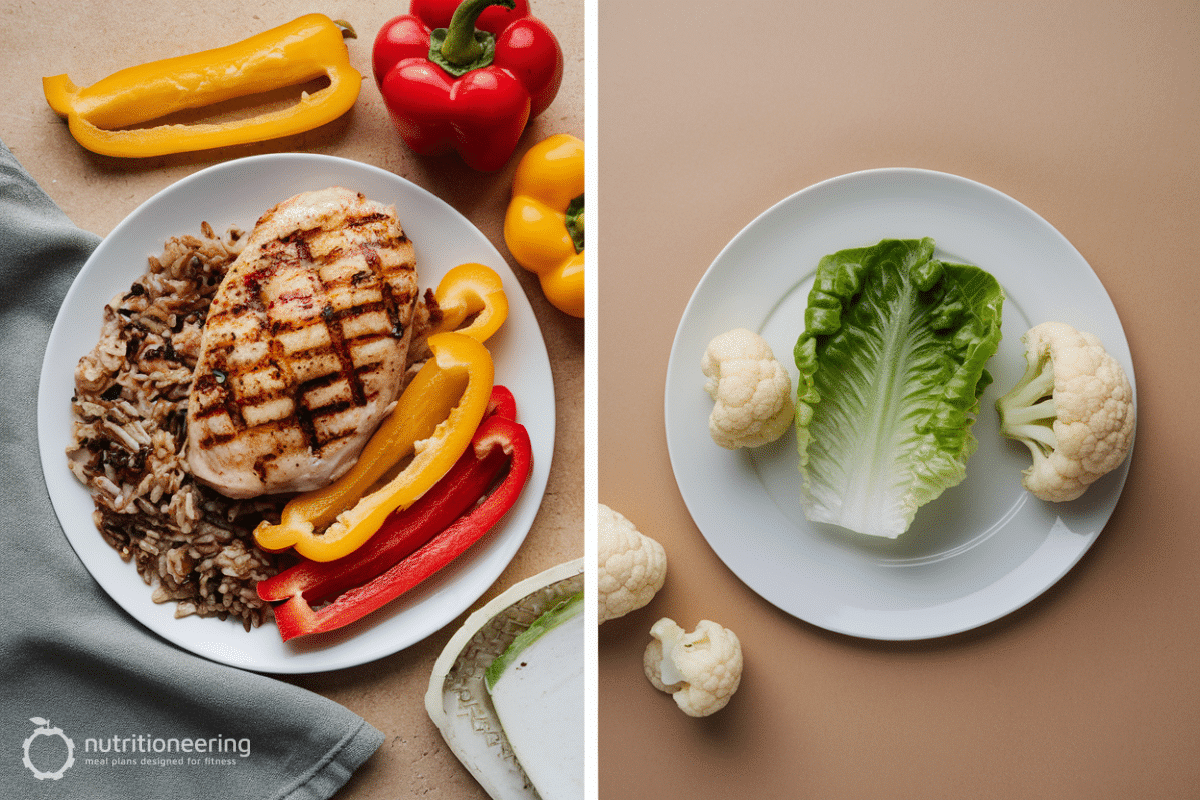
Healthy weight loss involves treating your body like a high-performance machine. Think of it like a Formula One race car.
Your job is to fill the car with precisely the amount of fuel needed to complete the race. Too much, and you’ll be heavy and slow. Too little, and you’ll sputter to a stop before the finish line.
In most cases, a slight calorie deficit of 100–600 calories a day is just right to get your body to burn fat without breaking down.
To put that in perspective, I lost 31 pounds in 5 months with an average daily deficit of just 340 calories. This number is probably much smaller than you’d expect, especially considering I was eating 2,800 calories daily!
Again, this method works because your body doesn’t react as if it’s in a starvation situation. As a result, you maintain muscle mass, metabolic rate, and appetite as if everything is normal.
2. High Protein = Low Hunger
Your daily protein intake is another vital factor in maintaining metabolism and appetite. A high-protein diet ensures your body doesn’t break down muscle tissue, which is the primary driver of your metabolic rate.
A review of 49 studies showed that a protein intake of 0.5 to 0.7 grams per pound of body weight is ideal for maintaining muscle mass1. In other words, divide your body weight by 2 to find your minimum protein intake in grams.
Once you have a daily protein target, divide it across several smaller meals to feel full all day.
Additionally, protein helps you feel full longer after eating than fat or carbohydrates. One study showed that people ate less after eating a high-protein meal than a high-carb meal2.
Protein is more satiating because it reduces ghrelin, the hormone that makes you feel hungry. The chart below illustrates how protein keeps ghrelin levels lower after a meal.

3. The Power of Clean Eating
Research suggests the average American diet consists of up to 80% ultra-processed foods like sodas, sweets, and takeout3.
This statistic is shocking because these foods are high in calories but low in nutrition. And it’s one of the primary reasons we have an obesity epidemic.
Our collective health would improve if 80% of our diet was whole or minimally processed foods.
Obviously, processed foods contain vitamins and minerals that keep you healthy. But they’re also less calorie-dense, which means they fill you up while keeping the energy balance scale tilted in favor of weight loss.
Don’t stress about a certain percentage; just focus on getting more whole foods in your diet. Next time you reach for a bag of chips, swap it out for leafy greens or veggies and eat until you’re full.
Setting Realistic Expectations
The beauty of the three steps I just outlined is that you can lose weight consistently and sustainably for months or even years. However, it’s important to manage your expectations.
With shortsighted crash diets, you could lose 30 pounds in 30 days. But six months later, most people have regained all the weight and sometimes even more.
On the other hand, sustainable dieting typically results in gradual weight loss of 2–5 pounds per month. After six months, you could easily lose 30 pounds and keep right on going because you’re not hungry or burned out!
The idea is to lose more weight in the long run instead of chasing instant gratification.
Of course, if you have obesity-related health issues, it would be better to take a more aggressive approach with the supervision of a physician. But for the average person with 10 to 50 pounds to lose, slow and steady weight loss wins the race.
With a bit of patience and a healthy lifestyle, you’ll be rewarded with lasting weight loss that truly transforms your body.
Take Action
If you’re motivated to embark on a sustainable diet plan, that’s great!
The best place to begin is by dialing down your energy balance. Even if you don’t know how many calories to target, you can start by tracking your intake with a simple calorie-counting app.
Then, slightly reduce your calorie consumption until you see gradual weight loss. And keep your intake there as long as you continue losing 1/2 to 1 pound per week.
The tracking app should also show your macronutrient intake so you can ensure you’re getting enough protein. Finally, focus on hitting those targets with mostly clean foods that fill your belly and nourish your body.
That’s it. With this simple diet strategy, you’re on your way to long-term weight loss without hunger or cravings.
I wish you good luck in reaching your healthy weight!
Get Started With These Tools & Calculators
Accurate TDEE Calculator Shows How Many Calories You Burn
References
1) Morton, Robert W., et al. “A systematic review, meta-analysis and meta-regression of the effect of protein supplementation on resistance training-induced gains in muscle mass and strength in healthy adults.” British journal of sports medicine 52.6 (2018): 376-384.
2) Foster-Schubert, Karen E., et al. “Acyl and total ghrelin are suppressed strongly by ingested proteins, weakly by lipids, and biphasically by carbohydrates.” The Journal of Clinical Endocrinology & Metabolism 93.5 (2008): 1971-1979.
3) Martini, Daniela, et al. “Ultra-processed foods and nutritional dietary profile: a meta-analysis of nationally representative samples.” Nutrients 13.10 (2021): 3390.


